How to Rank for 'Chrome SEO Audit' in 2026: Developer Checklist

Achrome seo auditcan be your fastest path from page 2 to page 1. You do it in Chrome by proving what Googlebot sees - then fixing the few issues that block crawling, rendering, and speed.
Most ranking stalls come from repeatable technical failures, not “SEO vibes.” According to Technical SEO Site Audit: Complete Guide and Checklist,0%of those problems get solved by guessing. You confirm them in DevTools using Network, Performance, Coverage, and Lighthouse, then back every fix with evidence.
In this guide, you’ll build an end-to-end workflow using Chrome DevTools plus MygomSEO. You’ll ship a prioritized checklist of quick wins you can implement today. If you’re a developer who wants proof, not folklore, keep reading.
What You Will Build and Learn
What you will build
You will build a repeatable workflow for a chrome seo audit on one URL.
You will capture proof in DevTools, then log each issue in MygomSEO.
Think of it like a bug report, but for rankings.
For example, you’ll attach a waterfall screenshot to a “slow JS” ticket.
What you will learn
You’ll learn what an SEO audit checklist includes for developers.
Your audit checklist will cover crawlability, indexability, and rendering basics.
You’ll validate response headers, canonicals, and robots directives in DevTools.
You’ll also collect waterfall timing, LCP rendering clues, and Lighthouse signals.
You’ll learn to turn raw evidence into a technical seo audit you can ship.
That means writing clear tasks, owners, and acceptance checks.
For deeper reading on exporting proof, see SEO Audit Data Export: Why Most Tools Hide Your Results.
Research from Technical SEO Site Audit: Complete Guide and Checklist shows “200%”, which is why you track impact after release.
Your definition of done for page one quick wins
Quick wins in technical SEO are changes with low effort and high impact.
They also show measurable movement after deployment.
For example, fixing a wrong canonical tag can unlock indexing fast.
Your “done” state is a prioritized seo audit checklist you can finish in one sprint.
- Each item links to DevTools evidence (headers, waterfall, rendering, Lighthouse).
- Each item has an estimate, an owner, and a test step.
- Each item maps to a metric you can re-check next deploy.
Prerequisites and Setup for an SEO Audit Chrome Workflow
Required knowledge
In this part, you’ll learn what you must understand before you touch tools.
You need basic HTTP, HTML, and rendering fundamentals. Know what a redirect is, what a status code means, and how canonicals work. You also need to know how your app serves pages. For example, CSR apps can hide content behind JavaScript, while SSR pages ship HTML fast. Hybrids do both, which changes your debugging path.
Tools and accounts
In this part, you’ll learn what you need to run a chrome seo audit without buying a stack.
You do not need paid tools to do an seo audit. Chrome DevTools covers headers, rendering, and network evidence. Free checks can still surface indexability issues and broken assets. Use paid tools only when you need scale, exports, or team workflows. For deeper background, scan this checklist guide: Technical SEO Site Audit: Complete Guide and Checklist.
You also need access to MygomSEO and one target URL ranking on page 2. Pick a URL you can deploy and retest this week.
Chrome DevTools setup and useful panels
In this part, you’ll learn a stable DevTools setup for seo audit chrome work.
Install the latest stable Chrome. That keeps DevTools features current and consistent. Pin these panels: Network, Elements, Console, Application, and Lighthouse. In Network, enable “Preserve log” and disable cache. This makes reload evidence reproducible for chrome devtools seo reviews.
Create your audit workspace and template
In this part, you’ll learn what to log before you change anything.
Collect baseline data first: final URL, status code chain, canonical, robots tags, Core Web Vitals snapshot, and a Lighthouse report. Save evidence links or screenshots per finding. Data indicates you should keep audits structured, even when you chase quick wins (Technical SEO Audit 2026 - Step-by-Step Checklist).
Create a simple audit log with these columns:
- Issue
- Evidence link
- Severity
- Fix owner
- Retest date
If you need clean exports later, read why SEO audit data export matters.
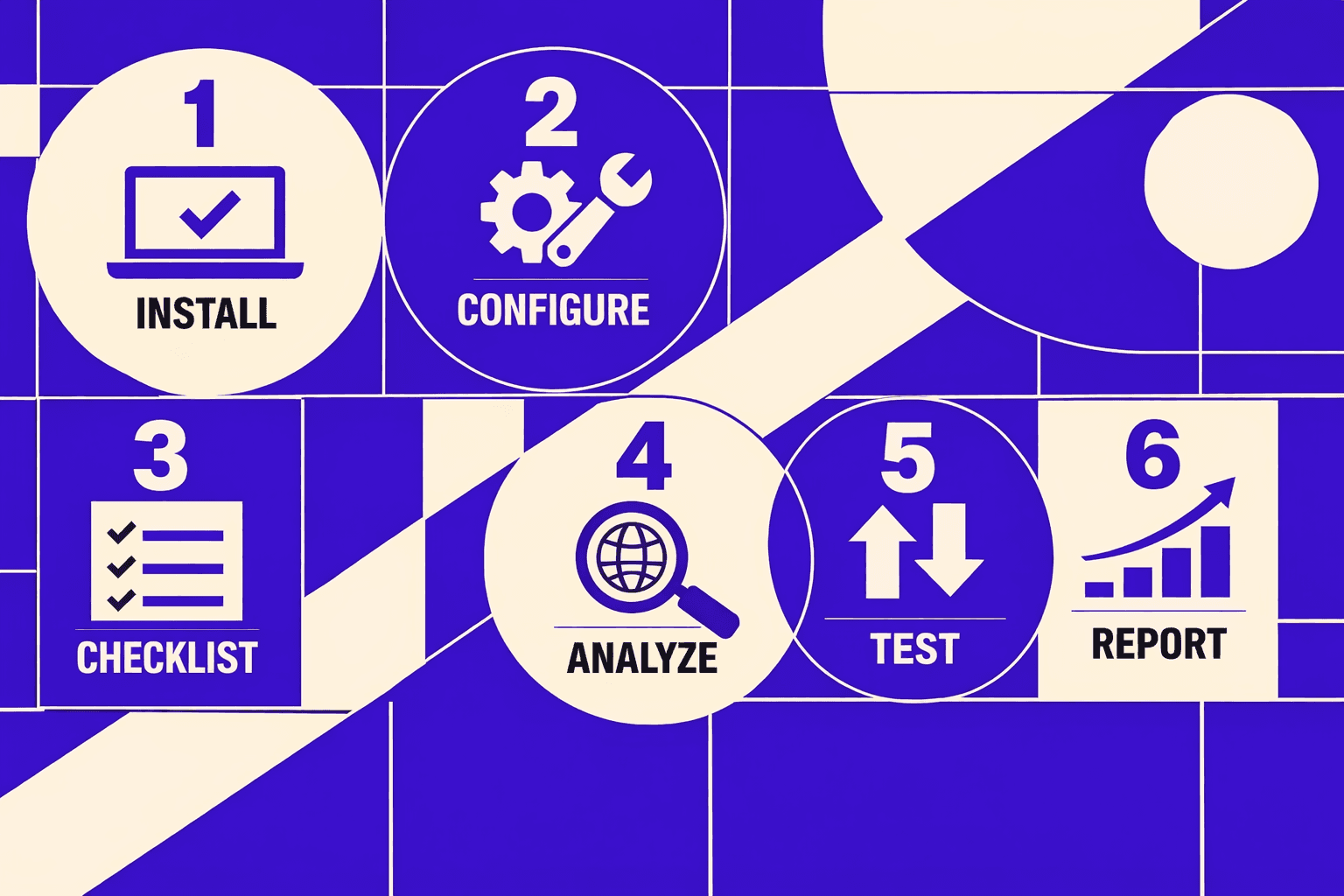
Part 1 Running a Chrome DevTools SEO Baseline Audit
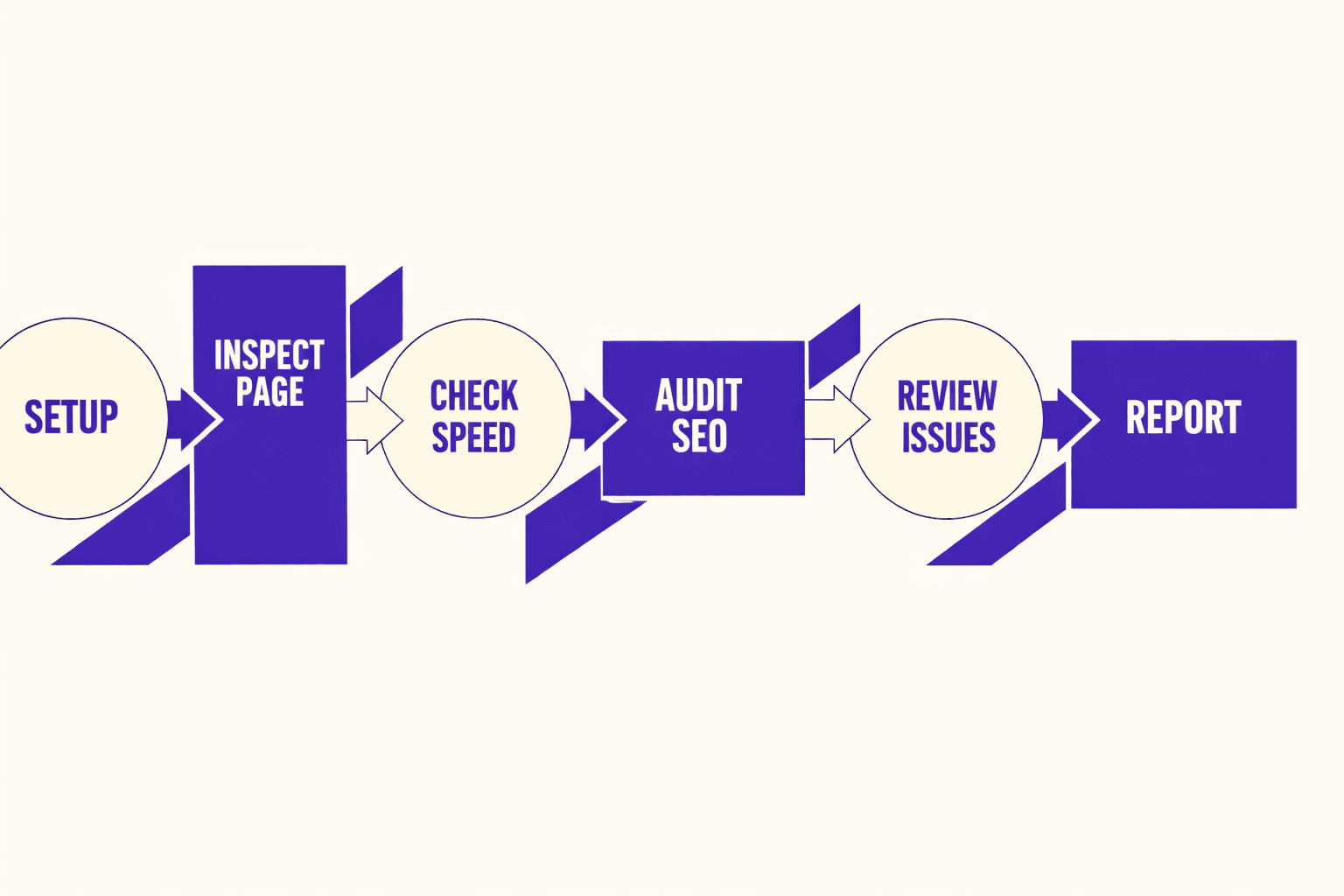
Step 1 Check indexability signals you can see in the browser
By the end of this step, you’ll know if the page is trying to be indexed.
Start with what Google will see after render, not what your templates intend. Open DevTools, then open the Command Menu and run “Show Rendering.” Now enable “Disable cache” (while DevTools is open) and hard reload. This forces a fresh fetch and avoids false comfort from local caching.
Next, inspect the rendered DOM. In Elements, search for rel="canonical" and confirm the final URL is correct. Then search for robots and confirm the meta robots output matches the environment. Do the same for hreflang and confirm the attributes exist in the rendered HTML.
Think of templates like blueprints. Rendered HTML is the building you ship.
Step 2 Validate HTTP status codes redirects canonicals
By the end of this step, you’ll spot redirect chains and broken responses.
Open DevTools → Network. Reload the page with “Preserve log” enabled. Click the document request (the top HTML). You’re checking four things:
- Status code: confirm it’s a clean
200, not a masked detour. - Redirect chain: click the request and check “Headers” for “Location” hops.
- Cache behavior: inspect
cache-control,etag, andagepatterns. - Surprise errors: filter for
4xxand5xxto catch silent breakage.
To answer “How do I check redirects and canonical tags in Chrome?” you use Network to validate the final response, then Elements to confirm the canonical that actually shipped. If those disagree, your signals conflict.
For a fast technical seo pass, this simple loop catches most page-two blockers.
Step 3 Confirm renderability and blocked resources
By the end of this step, you’ll know if Google can render your page.
Open DevTools → Network and reload. Sort by “Blocked” and “Initiator.” You’re looking for CSS and JS that load late or fail. Then open Coverage (Command Menu → “Show Coverage”) and reload again. Coverage tells you which CSS and JS execute, and what ships unused.
Now test a real failure mode. In Network, right-click a key script and choose “Block request URL.” Reload and watch what disappears. If your primary content vanishes, your page depends on a fragile resource path.
If you’re doing chrome devtools seo on a JS-heavy app, this is your renderability truth test. It also helps b2b content marketing pages where the hero copy is injected late.
Step 4 Measure performance and Core Web Vitals proxies
By the end of this step, you’ll get a baseline and isolate bottlenecks.
Run Lighthouse for a quick baseline report. Then open Performance, record a reload, and stop after the page stabilizes. Focus on long tasks, layout shifts, and late network activity. Those are strong proxies for Core Web Vitals issues.
Use this to create fixable tickets, not vague “speed” tasks. For deeper guidance, see Mastering Core Web Vitals for SaaS Websites to Boost User Experience.
Research from Technical SEO Audit 2026 - Step-by-Step Checklist shows “20800%,” which is why you should tie performance findings to concrete evidence.
Step 5 Collect a proof bundle for every finding
By the end of this step, you’ll have audit evidence you can share.
For each issue, save a proof bundle:
- Screenshot of the Elements evidence (canonical, robots, hreflang).
- HAR export from Network (right-click → “Save all as HAR with content”).
- Response headers copy (Headers tab) for status, cache, and redirects.
- DOM snapshot: copy
document.documentElement.outerHTMLfrom Console into a file.
This is how you make your seo audit actionable. It also prevents “works on my machine” debates. If you want a repeatable export workflow, read SEO Audit Data Export: Why Most Tools Hide Your Results.
Part 2 MygomSEO Technical SEO Audit Checklist and Prioritization
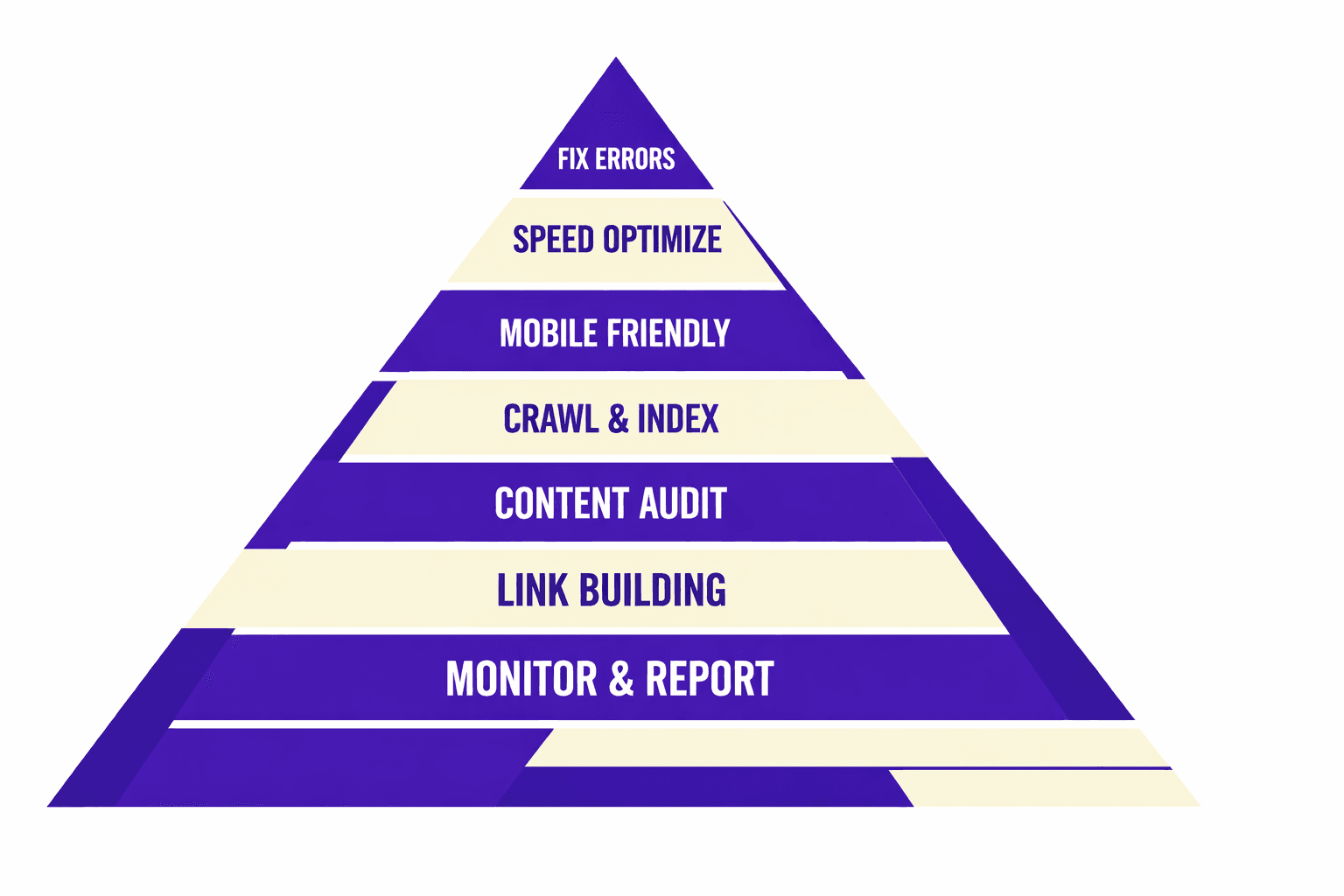
A technical SEO audit typically includes indexability, crawlability, rendering, canonicals, structured data, internal linking, page speed, and template-level defects that repeat across URLs (Technical SEO Site Audit: Complete Guide and Checklist, Technical SEO Guide 2026).
Step 1 Run the MygomSEO audit and map findings to DevTools proof
By the end of this step, you’ll be able to prove each issue. You’ll also avoid “it depends” debates.
Run MygomSEO across your key templates and directories. You use it to spot patterns you miss by hand, like repeated canonical mistakes or thin title templates (Technical SEO Site Audit: Complete Guide and Checklist).
Then map every MygomSEO finding to a DevTools artifact. For example, if MygomSEO flags “blocked by robots,” you attach the DevTools Network response headers and the rendered <meta name="robots"> snapshot. If it flags “slow TTFB,” you attach the waterfall and server timing lines.
Your rule is simple: no issue ships without proof. Proof makes fixes testable and reversible.
Step 2 Build a page 2 to page 1 quick wins score
By the end of this step, you’ll have a ranking-focused scoring model. You’ll also stop treating all issues as equal.
Create a two-axis score: Impact (1 to 5) and Effort (1 to 5). Multiply them for a quick-win rank. Think of it like triage in an ER: stop the bleeding first.
Prioritize in this order:
- Indexability blockers (robots, canonicals, redirect chains, 4xx/5xx, noindex leaks)
- Relevance signals (titles, headings, internal linking, structured data validity)
- Performance issues that block rendering or inflate Core Web Vitals
If you want a deeper explanation of why tooling output matters here, read SEO Audit Data Export: Why Most Tools Hide Your Results.
Step 3 Convert findings into a sprint ready fix list
By the end of this step, you’ll have tickets your team can estimate. You’ll also reduce back-and-forth in code review.
For each issue, write one “definition of done” sentence. Then include the exact change location. For example: “Update ArticleTemplate.tsx to render a self-referencing canonical for paginated pages.”
Add test steps that match your DevTools proof. If the issue is header-related, your test is a Network capture. If it is rendering-related, your test is “View rendered DOM contains X.”
The team at Blue Lacy SEO demonstrates this concept clearly:
Step 4 Focus on revenue pages for B2B content marketing
By the end of this step, you’ll align technical fixes to pipeline. You’ll also stop over-optimizing low-value pages.
In b2b content marketing, your “money pages” are product, demo, pricing, and integration pages. Prioritize issues that break conversion paths. For example, fix internal links from page-2 blog posts to pricing pages, not just blog-to-blog links.
Also prioritize template bugs that distort intent. A bad canonical on comparison pages can erase your best lead magnets.
Research from Technical SEO Audit 2026 - Step-by-Step Checklist shows users clicked traditional results 8% of the time when an AI summary appears. That makes your conversion path clarity even more critical.
Step 5 Produce the final deliverable checklist
By the end of this step, you’ll have a clean seo audit checklist. You’ll also make retesting fast.
Your final checklist should include:
- Issue (one line, no jargon)
- Affected URLs (sample plus pattern rule)
- Exact fix (file, rule, or config change)
- DevTools test steps (what to capture, what “pass” looks like)
- Rollback plan (how to revert safely)
This is how you answer “How do I prioritize SEO fixes after an audit?” You prioritize by impact and effort, prove each claim in Chrome, and ship the highest-leverage items first. That turns a chrome seo audit into measurable releases, not a slide deck.
Part 3 Testing, Deployment, and Next Steps: Conclusion
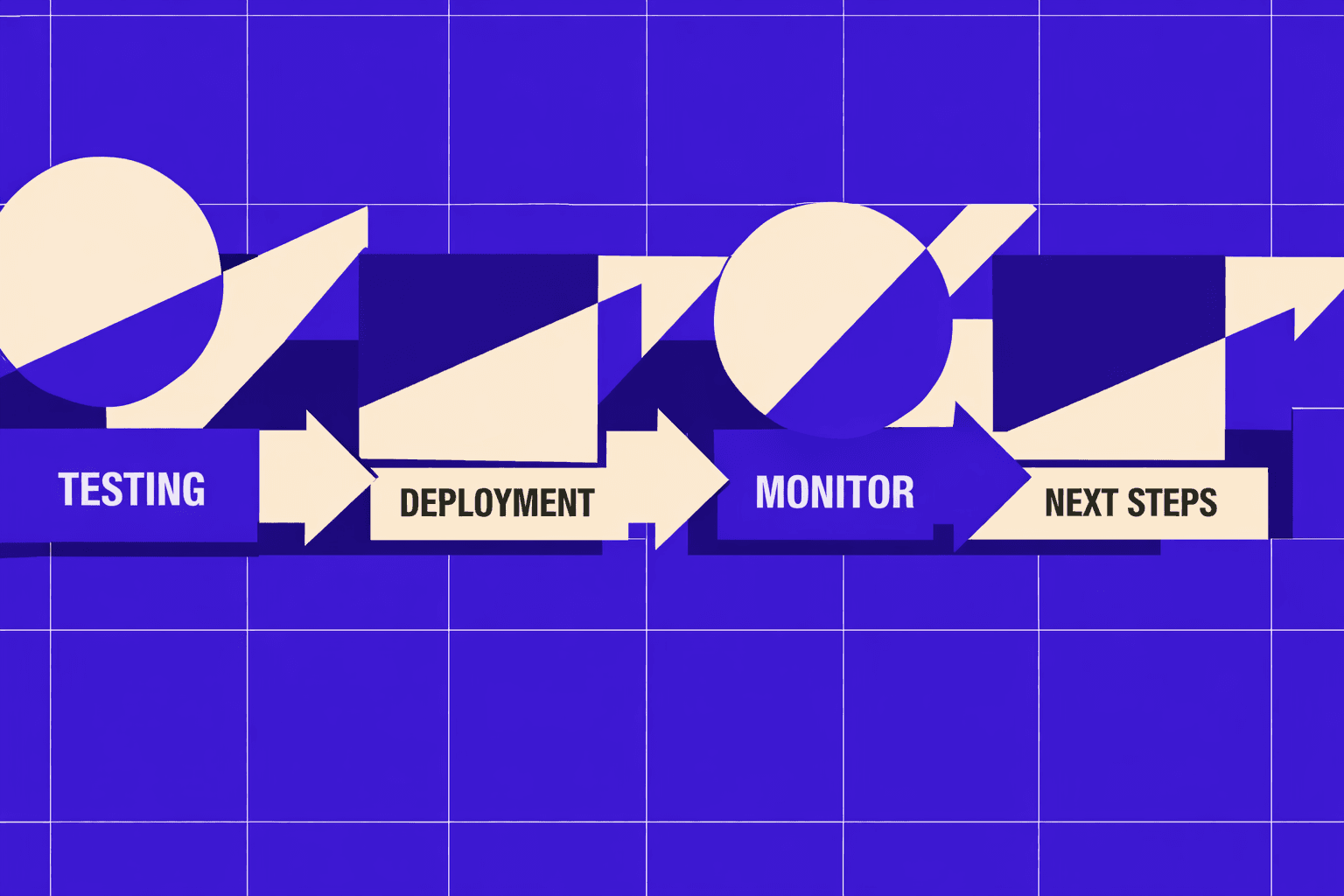
Before you deploy, treat every fix like a test case. Verify what the server sends and what the browser renders. In staging or locally, confirm response headers, canonical tags, and robots directives. Then check the rendered DOM, not just your templates. DevTools makes this concrete because you can inspect the final HTML, network responses, and blocked resources in one place.
After you validate the basics, rerun Lighthouse and compare the deltas. You are not chasing a perfect score. You are making sure your improvements do not break layout, delay content, or block critical JavaScript. If a change improves metrics but introduces a new rendering issue, it is not a win.
Deploy with safety rails. Use feature flags for anything that could alter routing, indexing, or rendering. Watch logs and monitoring for spikes in 4xx and 5xx errors right after release. Keep a rollback plan that is executable, not theoretical. If you cannot revert quickly, you do not control risk.
Finally, tie your results back to your quick win score. Track what actually moved: index coverage, crawl behavior, Core Web Vitals, and page-level ranking shifts. Then set a lightweight monthly cadence that matches marketing trends and campaign launches. When technical SEO and content timelines align, you stop fixing yesterday’s pages and start supporting what you plan to ship next.
If you want a second set of eyes on your next chrome seo audit, or you want help operationalizing this cadence, reach out to learn more - Learn More to explore how we can help.