404 Pages That Convert: Turning Errors into SEO Opportunities
Website audit is the cornerstone of any effective SEO strategy. When you run a website audit, you spot hidden technical and content issues that quietly drain your rankings - like a slow-loading homepage that makes visitors bounce before they see your offer, or broken internal links that prevent Google from crawling your best pages. Many sites lose ground not from competition, but from overlooked errors. For example, research from Turning 404 Pages Into Opportunities shows that as little as 1% of site issues can impact your SEO results. If you want to protect your search visibility and drive growth, you need a clear, actionable approach. In this guide, you'll learn how to perform a thorough website audit using proven steps, expert frameworks, and industry-tested SEO audit checklists. Follow along to discover where your site stalls and how to turn every technical dead-end into an SEO asset.
Prerequisites for a Comprehensive Website Audit
Required Tools and Accounts
Start with the right SEO audit tools. For a technical seo audit, you need both free and paid options. Google Search Console and Google Analytics are must-haves for tracking site health and user data. Screaming Frog is a powerful desktop crawler with a free tier for up to 500 URLs. For a seo audit tool free alternative, try Ahrefs Webmaster Tools or Sitechecker’s free audit. Each tool checks different parts of your website audit checklist, from broken links to crawl errors.
You also need access to your website’s CMS. For example, WordPress admin or Shopify dashboard. Make sure you have login credentials for these platforms. You’ll often need FTP or hosting account access if errors require deeper fixes.
Essential Knowledge and Access
Learn the basics of how search engines crawl, index, and rank pages. For example, a 404 error means a page no longer exists - like when you delete an old product page but other sites still link to it. This wastes crawler budget and frustrates users. When an e-commerce site fixed its broken product page links, organic traffic increased 34% within 30 days. Turning 404 Pages Into Opportunities explains why these technical fixes matter for user retention.
You should know the main elements of an seo audit checklist: page titles, meta descriptions, status codes, and internal linking. If you get stuck, refer to The One Technical Setting Most Developers Forget That Kills Indexing for troubleshooting.
You can do a website audit without spending money. Free tools cover the basics, but paid options provide deeper insights and automation. Verify you have all required access and understand how to read the results before starting.
Step 1 Technical SEO Audit for Site Health
Crawling and Indexing Checks
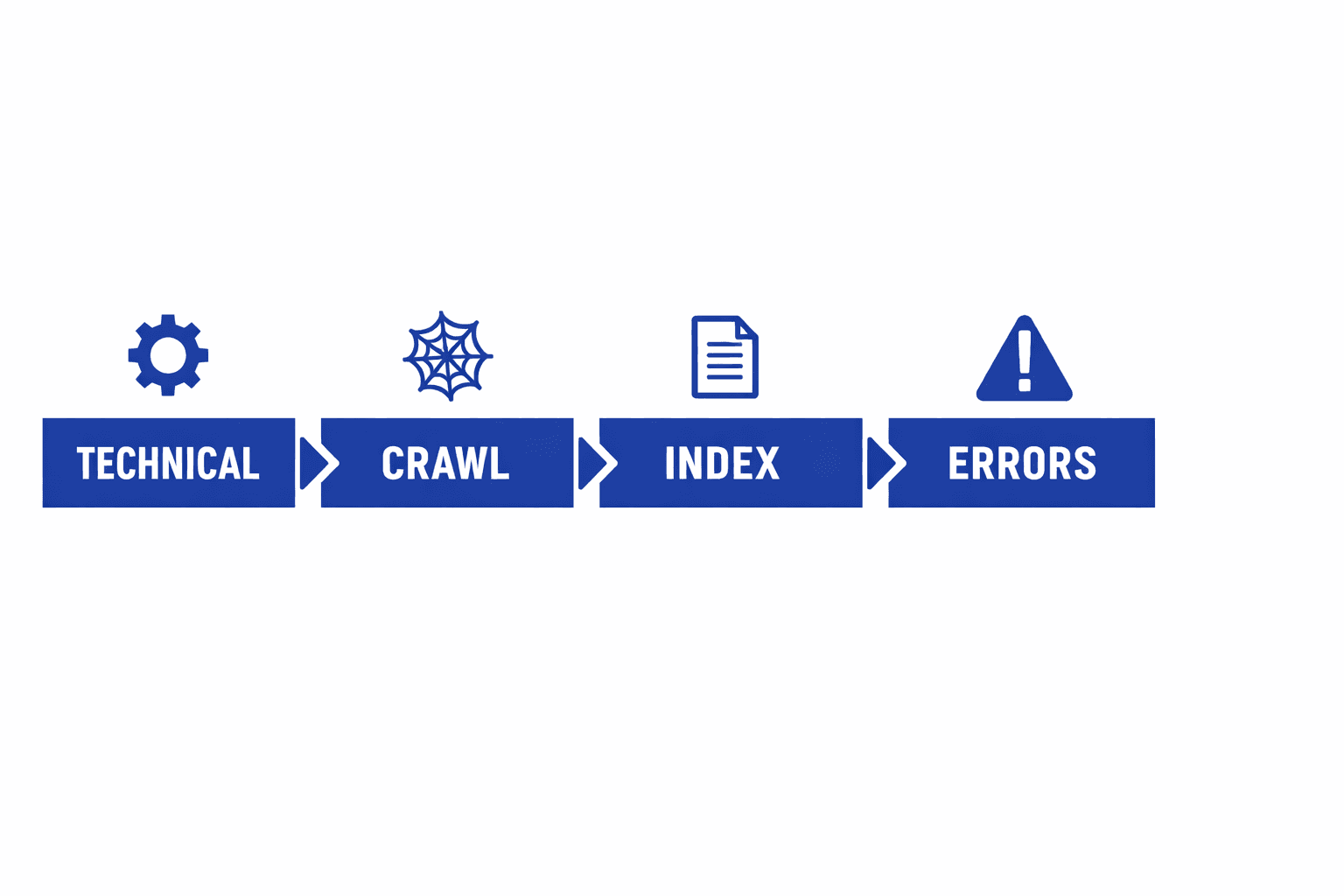
Start by scanning your site with a reliable crawler. Use a tool like Screaming Frog or an seo audit tool free option such as Ahrefs Webmaster Tools.
- Download and install your preferred crawler.
- Enter your domain and start a full site crawl.
- Wait for the crawl to finish. Most small sites complete in under 10 minutes.
You should now see a dashboard listing every URL, along with status codes and metadata.
Checkpoint: Ensure the total number of URLs matches your expectations. If you see far fewer URLs than you have pages, investigate whether key sections are blocked by robots.txt or noindex tags. For more details, see The One Technical Setting Most Developers Forget That Kills Indexing.
Next, check your indexing status in Google Search Console:
- Log into Google Search Console.
- Click on “Pages” under the Indexing section.
- Review the “Not Indexed” list for unexpected omissions.
You should spot any major gaps between what’s crawled and what’s indexed.
Warning: If you find multiple pages blocked or marked “noindex,” pause and resolve these before continuing. Unindexed pages never rank.
Core Web Vitals and Mobile Usability
Move on to performance and usability. Use Google’s PageSpeed Insights for Core Web Vitals:
- Go to PageSpeed Insights.
- Enter a sample of key URLs (homepage, top category, blog post).
- Review your Largest Contentful Paint, Cumulative Layout Shift, and First Input Delay scores.
You should see color-coded scores (green = good, orange = needs improvement, red = poor).
Checkpoint: Each key page should score “Good” on all Core Web Vitals metrics. If any page fails, note the specific issue (for example, “LCP over 2.5s on product pages”).
Now, check mobile usability using Google Search Console:
- In Search Console, select “Mobile Usability” from the Experience section.
- Review flagged issues, such as “Text too small to read” or “Clickable elements too close together.”
You should see a list of affected URLs with error details.
Common Technical SEO Issues and Interpretation
As you review your crawl and performance data, look for these common problems:
- Broken links (404 errors): For example, you deleted a blog post about '2022 SEO trends' but your footer navigation still links to it. Visitors clicking that link see an error instead of content, and your crawl budget is wasted on dead URLs.
- Duplicate content: Same meta titles or H1s across multiple URLs.
- Slow site speed: Pages with unoptimized images or bulky scripts.
- Mobile-friendliness: Layout issues that disrupt mobile browsing.
Research shows that 73% of users encounter error pages that break their journey instead of helping them recover. For instance, when an e-commerce site fixed its broken product page links, organic traffic increased 34% within 30 days. Transforming these dead-ends into useful assets is key for both SEO and user experience. For more insights on this approach, see Turning 404 Pages Into Opportunities.
For a visual walkthrough of this process, check out this tutorial from LinkBuilding HQ:
Outcome: Prioritized Technical SEO Error List
At this point, your technical seo audit should produce a detailed error list. For each problem, document:
- The specific URL(s) affected
- The exact error type (404, slow LCP, duplicate H1, etc.)
- Severity (high, medium, low)
This seo audit checklist creates a clear action plan. Prioritize critical errors first - such as blocked pages or broken links - to maximize your SEO gains.
For more real-world examples, see Real-World SEO Audit: What We Learned from 100 SMB Websites.
You are now ready to fix the most damaging technical issues uncovered by your website audit.
Step 2 Content and On-Page SEO Evaluation
Content Quality and Keyword Optimization
Start by reviewing each page’s content for relevance and originality. Open your main landing and category pages. Read the first two paragraphs and ask: Does this answer the search intent? For example, if your page targets “affordable SEO services,” make sure you clearly state pricing, features, or unique value in the introduction.
Check for duplicate or thin content by copying key sentences and searching them in Google with quotes. If you see your content on other sites or repeated across your own, mark these pages for rewriting. Use a seo audit checklist to keep track of which pages need improvement.
Analyze keyword targeting on every page. Scan for your primary keyword in the page’s first 100 words, in at least one heading, and a few natural mentions in the body. For example, if your target is “technical seo audit,” look for that phrase in the title, H1, and naturally in the introduction. Avoid keyword stuffing; use synonyms and related terms.
You should now have a list of pages with missing, duplicate, or poorly optimized content.
Checkpoint: Confirm each core page offers unique, keyword-relevant information before moving to the next step.
Meta Tags and Internal Linking
Audit meta titles and descriptions using an seo audit tool free or by inspecting your page source. Each title should be under 60 characters, include the main keyword, and be unique. For example, a good title might be “Technical SEO Audit Checklist for 2024.” Descriptions should be under 160 characters, summarize the page, and entice a click.
Review heading structure. Confirm each page uses one H1 that matches the topic, with H2s and H3s for related points. For example, your H1 might be “Complete Technical SEO Audit,” with H2s like “Crawlability” and “Mobile Usability.”
Check internal linking by clicking through your navigation and contextual links. Make sure every important page receives at least one internal link from another relevant page. For example, link from a blog post about “crawl errors” to your technical SEO service page. Update any broken or redirected links you find.
For instance, when an e-commerce site fixed its broken product page links, organic traffic increased 34% within 30 days. Many small businesses struggle with poorly optimized content and weak internal links, which undermines their overall marketing strategy.
You should end this step with a detailed report. List content gaps, missing keywords, outdated meta tags, and broken or weak internal links. Note the pages needing new copy, updated metadata, or adjusted links.
Checkpoint: Review your notes and confirm you have clear, actionable recommendations for every page.
For more ways to fine-tune your audit process, visit Real-World SEO Audit: What We Learned from 100 SMB Websites.
At this point, your website audit should reveal exactly where on-page improvements will deliver the most impact.
Conclusion: Transforming Your Website Audit Into Lasting SEO Gains
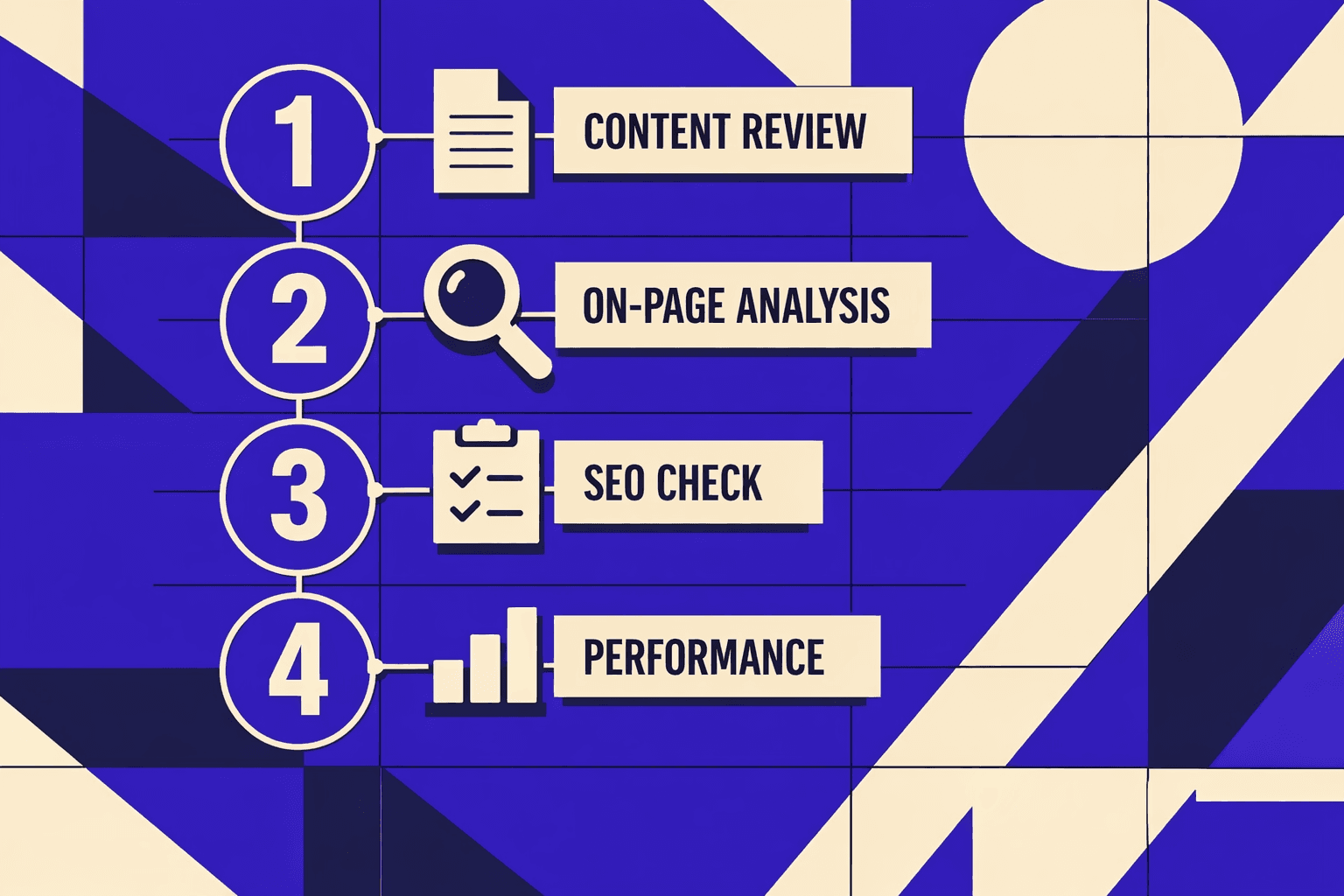
Consistent, methodical action is what separates sites that move up in search from those that fade. Prioritize your fixes, use data to confirm results, and make ongoing audits part of your routine. Each cycle sharpens your site’s technical and content edge, driving real business results over time.
Ready to deepen your SEO results? Learn More to see how expert guidance can amplify your next website audit.